.svg)

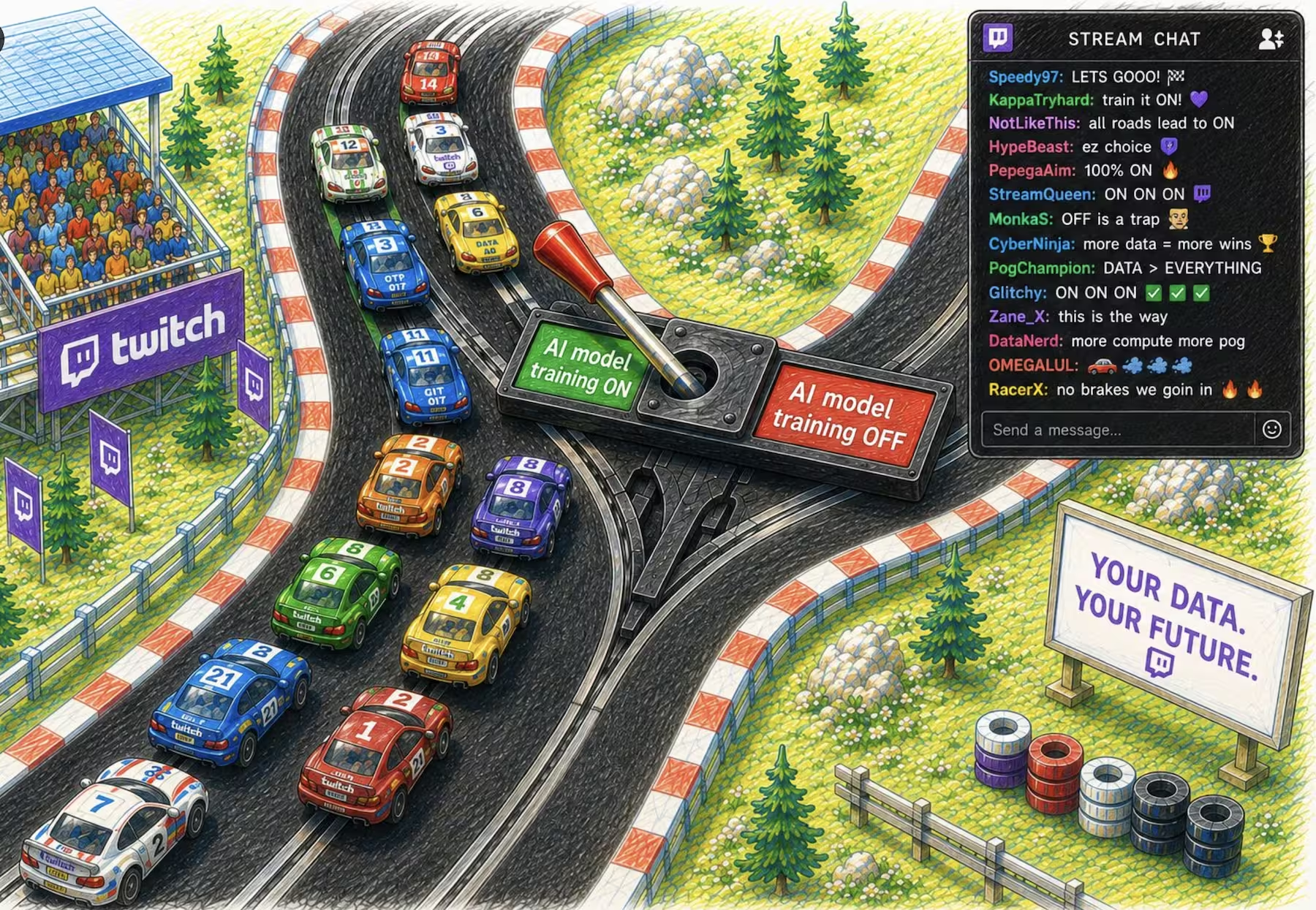

Twitch gave millions of its creators an AI training switch this month, choosing to turn it ON by default.
The Twitch setting happened in early August. The ‘Ok to train our model on your content?’ toggle was set to ON, by default.
It wasn’t buried in advanced settings, and there was no rogue agent that reset a loose global configuration.
The Chief Product Officer at Twitch, Mike Minton explained it plainly, “if it was opt-in, nobody would opt in.’
On the 12th of August the Terms of Service and the Privacy notice were updated the same day. The purpose clause modified from "monetizing the Twitch Services", to "business." The privacy notice picked up new language about developing and deploying generative AI models.
Eight days later a streamer filed a 37-page class action in the Northern District of California, on behalf of millions of creators, alleging that streams, chats and channel imagery had been training Amazon's Nova video model for roughly two years. Source in the comments.
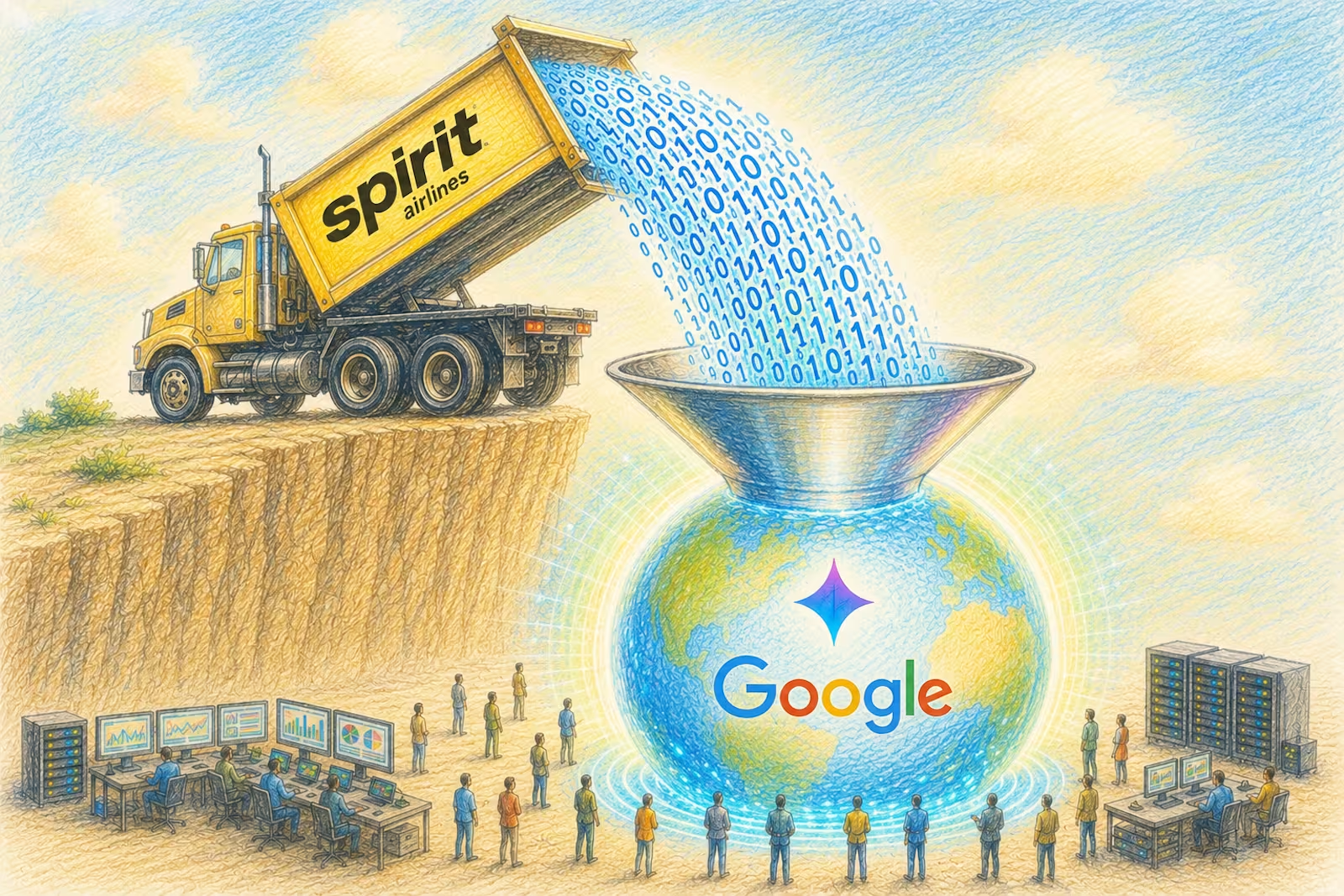
Google and Reddit have a reported $60M a year deal for training rights. For Twitch streamers, it’s currently game over.
We’re all running the same playbook with frontier models. Our operations are being tokenised inside somebody else's platform, and we’re presented with an admin console full of toggle switches, and a clause that decides what those toggles can govern over time. Anthropic announced last week the new practice of watermarking within its outputs, in response to the EU AI Act. Your proprietary insight and knowledge, now wrapped into an Anthropic provenance layer.
The control most enterprises look for is the admin console. Ensuring that the AI training toggle switch is clearly set to ‘OFF’ (of course it is!), and a screenshot of the setting included as a minute item shared with the risk committee.
A setting is only as durable as the clause that defines its scope. And that clause is owned by the vendor. They can elect to modify it on a Wednesday, and your screenshot in Google Drive > AI > Legal > Risk still says it’s turned ‘OFF’.
The alternative isn't a better default. It's not having the default set for you. Open-weight models running in your private tenancy, an orchestration layer you own that holds your prompts, your workflows and your institutional knowledge. New Dialogue enables your operation to swap models as the frontier moves, but the scope always stays yours.
Author: Tod Pedler






.avif)