
On a Friday morning in August, a contract administrator at Enviropacific in Northern Sydney sat down to solve a problem he had already unsuccessfully solved several times.
He had been using New Dialogue, the AI platform Enviropacific runs inside its own environment over its own documents, to work through incoming contracts. It worked, but getting a good answer depended on setting the question up properly, and setting the question up properly took longer each time than he wanted.
So he asked the platform to help him write the instruction itself. Three attempts that morning. Within the hour he was using the result: a detailed brief telling the assistant to work as an experienced senior contract administrator with decades of experience in complex project contracts.
Over the next three weeks, seven of his colleagues were using the same instruction. Today it is one of fifteen saved prompt tiles running on Enviropacific's private AI platform, and one of several prompt tiles the company wrote for itself.
The company
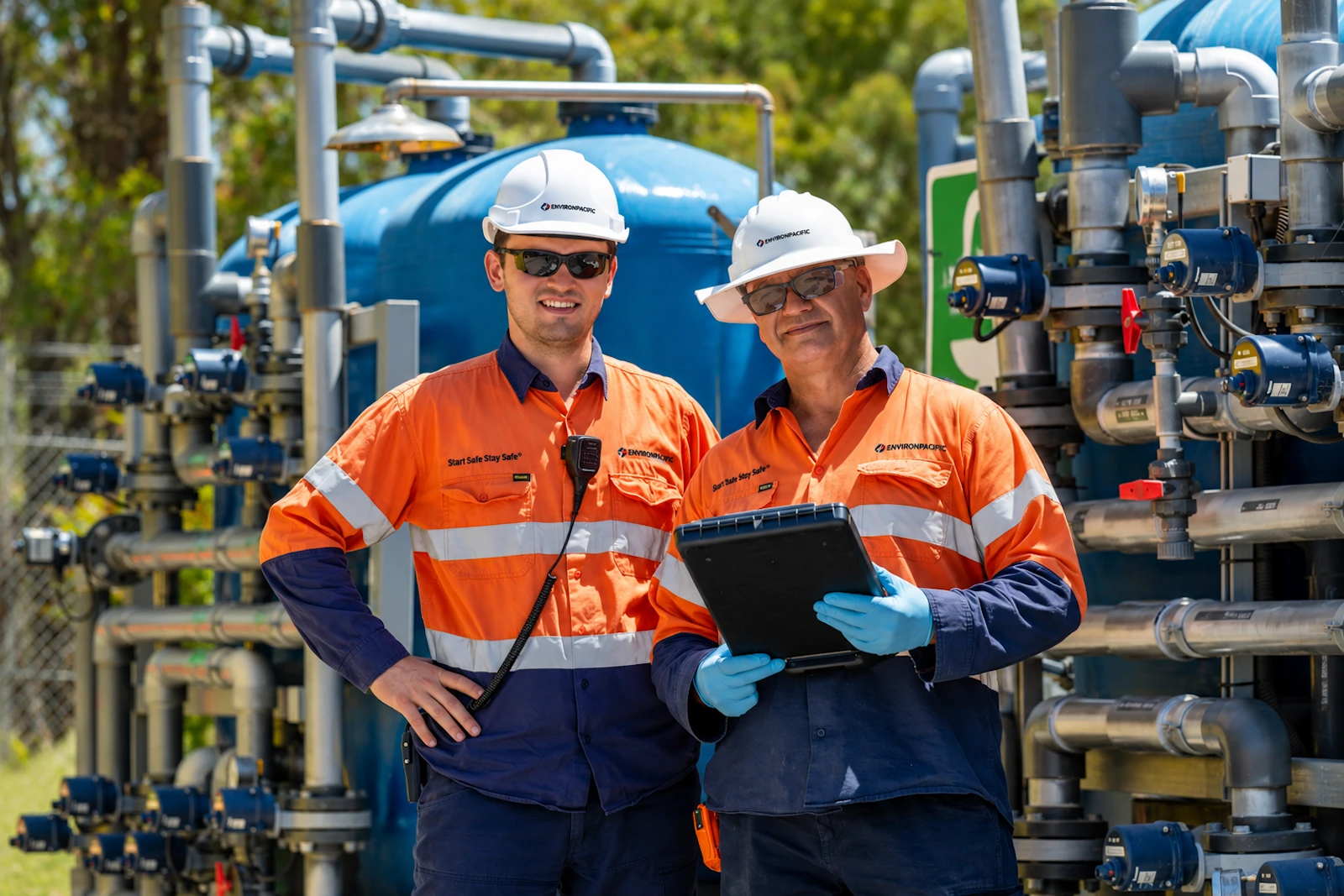
Enviropacific is one of Australia's major land remediation contractors, working across PFAS, asbestos, groundwater and on-site water treatment.With a national footprint, and a business whose economics run through two document-heavy functions: the contracts it signs and the tenders it bids for.
The problem
Both functions are bottlenecked on reading. A first-pass commercial review of an incoming contract means working through a long document against an internal playbook and producing a table of everything that departs from it. Tender submissions mean answering schedules of questions against a body of capability material that lives in past submissions nobody has time to search. Neither is work that scales by hiring, and both sit directly on revenue.
What we do
New Dialogue is deployed inside Enviropacific's own tenancy, over their own document estate, with their existing access controls enforced in the query rather than applied afterwards. Staff sign in through the company's own identity provider. Their document libraries are connected.. Nothing is sent to an external model and no data leaves the environment.
What they use it for
Two workflows were scoped at the outset. Contract review runs incoming contracts against Enviropacific's own commercial standards and returns the departures. Tender support drafts schedule responses from the company's own capability material and past submissions.
Since the platform opened to all staff, use has widened well beyond those two. Environmental scientists load site investigation reports and ask for the extent of contamination summarised and categorised by contaminant type against the proposed stages of development. Engineers draft scopes of works for subcontractors and fabrication management plans for water treatment projects. Site staff convert raw notes into formal environmental incident reports. People ask health and safety questions about permits, licences and approval chains, often through an assistant embedded in an internal site rather than by logging in. More recently, staff have used it to work through a client's pre-qualification audit, mapping each requirement to the internal document that answers it.
What the usage shows
In the eight weeks after the all-staff rollout, 69 identified people used the platform, with weekly volume settling at roughly three times the pre-rollout level. Close to a quarter of activity comes through embedded assistants carrying no individual identity, so the real number of people is higher.
The record also shows where people got stuck. Because what staff asked belongs to Enviropacific, it can be read, and reading it surfaced the friction as well as the successes: several losing track of which version of an uploaded document the platform was working from, others expecting yesterday's upload to still be there today. Both are addressable, one in the product and one in how the workflow is set up, and neither would have been visible from a usage dashboard. A deployment that can show you where its own users are struggling is a different thing from one that reports how many licences are in use.
The more telling measure is what Enviropacific has configured for itself. Four of the fifteen saved prompt tiles now running are built around a single contract administration role, covering subcontract pass-through provisions, general claims, extension of time and payment claims, and they descend from a prompt one of their own contract administrators wrote in August. Two more are successive versions of a low-risk contract review working against the company's own commercial playbook, the second refining the first. Two others were started by staff and left unfinished, which is its own kind of evidence.
None of that was asked for, specified or built by New Dialogue.
Why it holds
Sovereign deployment is usually sold as a compliance answer. For Enviropacific it has behaved like an adoption answer, and the evidence is not in what anyone says about it.
It is in what people put into it. Enviropacific's staff paste live commercial contracts, client project names, site details and half-finished correspondence into the platform, because it sits inside their own tenancy and they know it goes nowhere. A tool people trust with their real work gets used for real work. A tool people are careful around gets used for tidying up emails.
That trust is also what makes the rest possible. Because the platform reads the documents the business already has, the people who know the work can improve it themselves, without a procurement conversation and without anyone's permission. And what they build stays with the company.