.svg)


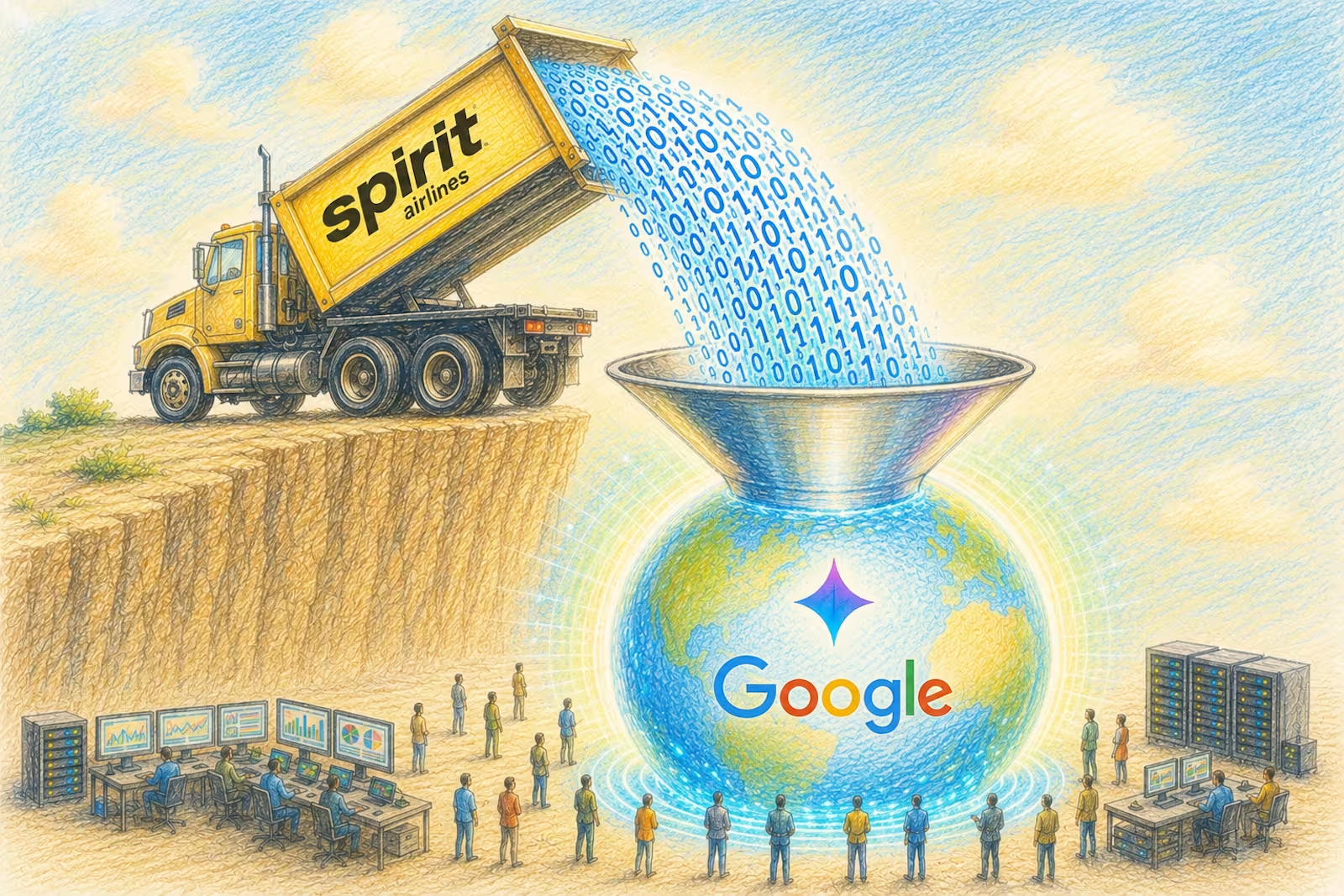
Microsoft's customers built more than a million custom AI agents in a single quarter last year, and three million across the financial year.
Microsoft built almost none of them, and neither did its customers' IT departments.
Lovable, which raised at $13.3 billion a fortnight ago, says people have started more than sixty million projects on it since late 2024, that apps built there now take 900 million visits a month, and that employees at nearly two thirds of the Fortune 500 have used it. Eighty per cent of the people building on it describe themselves as non-technical. Replit says it has users inside eighty-five per cent of the Fortune 500. Vercel markets its builder at product leaders, designers and marketers, in those words.
Shadow IT used to make spreadsheets, and spreadsheets stayed on the desktop. Shadow AI makes software, and software wants things. An API key. A database connection. Single sign-on. Somebody's customer list. It doesn't sit in a folder waiting to be found. It knocks on IT's door and asks to come inside.
Retool surveyed 307 chief technology, information and security officers in May. Ninety per cent said the pressure to enable AI-powered building had gone up in the past year. Two per cent said the volume of requests had fallen.
The same people are carrying the risk. Two thirds of CIOs and CTOs told IBM this year that they're held responsible for AI systems they don't fully control. Seventy per cent said business teams deploy technology faster than IT can track it. Eight per cent describe their governance as strong. Five per cent are very confident they can see all the internal tools they own. Fifty-nine per cent can't say for certain whether an AI-built tool has caused a production incident.
Your marketing team is a software vendor now, except they've skipped the procurement process.
The wall and the road
Say no, and people go around you. IBM counts what going around looks like. Shadow AI turned up in forty-three per cent of security incidents this year, more than double the twenty per cent a year earlier, and those breaches averaged $5.39 million against $4.63 million last year. Fifty-four per cent of CIOs told Dataiku they'd already found staff using tools nobody approved. Dataiku sells AI governance software, so weigh it accordingly. The number matches everything else in the field.
Say yes, and you own the queue. That's the backlog, and the backlog is why people went around you in the first place.
The third option has evidence behind it, which is rarer than it should be. Netskope watched personal-account AI use fall from seventy-eight per cent of users to forty-seven in a single year, while company-managed accounts went from twenty-five per cent to sixty-two. People took the sanctioned path once there was one. Moderna's staff built 750 custom GPTs in about two months inside a platform the company had chosen. NAB is building an agent registry. Bendigo ran its citizen-development program with about twelve people at a bank of seven thousand, which is the unglamorous version and probably the honest one.
The shape is always the same. A short list of places where building is allowed. A register of what has been built. Someone whose actual job is the queue. Review that triggers when a tool touches customer data, not when somebody opens a browser.
The wall costs more than the road, and it leaks.
Declaring an interest here. Governed deployment is what we do at New Dialogue, so discount my enthusiasm for paved roads accordingly.
Brussels blinks
If the plan was to wait for the law, the plan just got eighteen months longer.
The EU's AI Act was meant to bite this month. Its high-risk obligations, the ones compliance teams have spent two years preparing for, were due on 2 August. Nine days out, the Digital Omnibus was published in the Official Journal, and by 27 July it was in force. The high-risk deadline moved to December 2027 for standalone systems, and August 2028 for AI embedded in regulated products. The strictest AI law in the world deferred its hardest part with a fortnight to spare.
Australia went the other way, quietly. From 10 December, organisations covered by the Privacy Act have to disclose in their privacy policies where a computer program is used to make, or to do something substantially and directly related to making, a decision that could reasonably be expected to significantly affect someone's rights or interests.
Not the model. The decision.
There's a fair chance one of those decisions is already being made by something your operations team built in an afternoon. You've got until December to find out which ones.
A PowerPoint and an 8-K
In May a bank in Pennsylvania filed something no bank had filed before. CB Financial Services lodged a material cybersecurity incident disclosure with the SEC over what it called "the handling of certain non-public customer information using an unauthorized artificial intelligence-based software application". Names, social security numbers, dates of birth. An employee had fed them into an AI tool while putting a presentation together. Lawyers reading the filing called it the first of its kind: a material cybersecurity disclosure with no attacker in it.
No money moved. No systems went down. No attacker was involved. Somebody was making slides.
This seems to be the first securities disclosure caused by using the wrong chatbot to build a deck. The disclosure era has arrived ahead of the loss era. You'll be explaining this class of incident to a board, a regulator or a customer long before it costs you a dollar, and "we didn't know they were using it" doesn't survive contact with any of the three.
The people flooding IT with requests aren't the problem. They're what everyone said they wanted: staff who understand the work, building for the work, without waiting two years for a project to be prioritised. What's missing isn't enthusiasm. It's a road.
One more thing
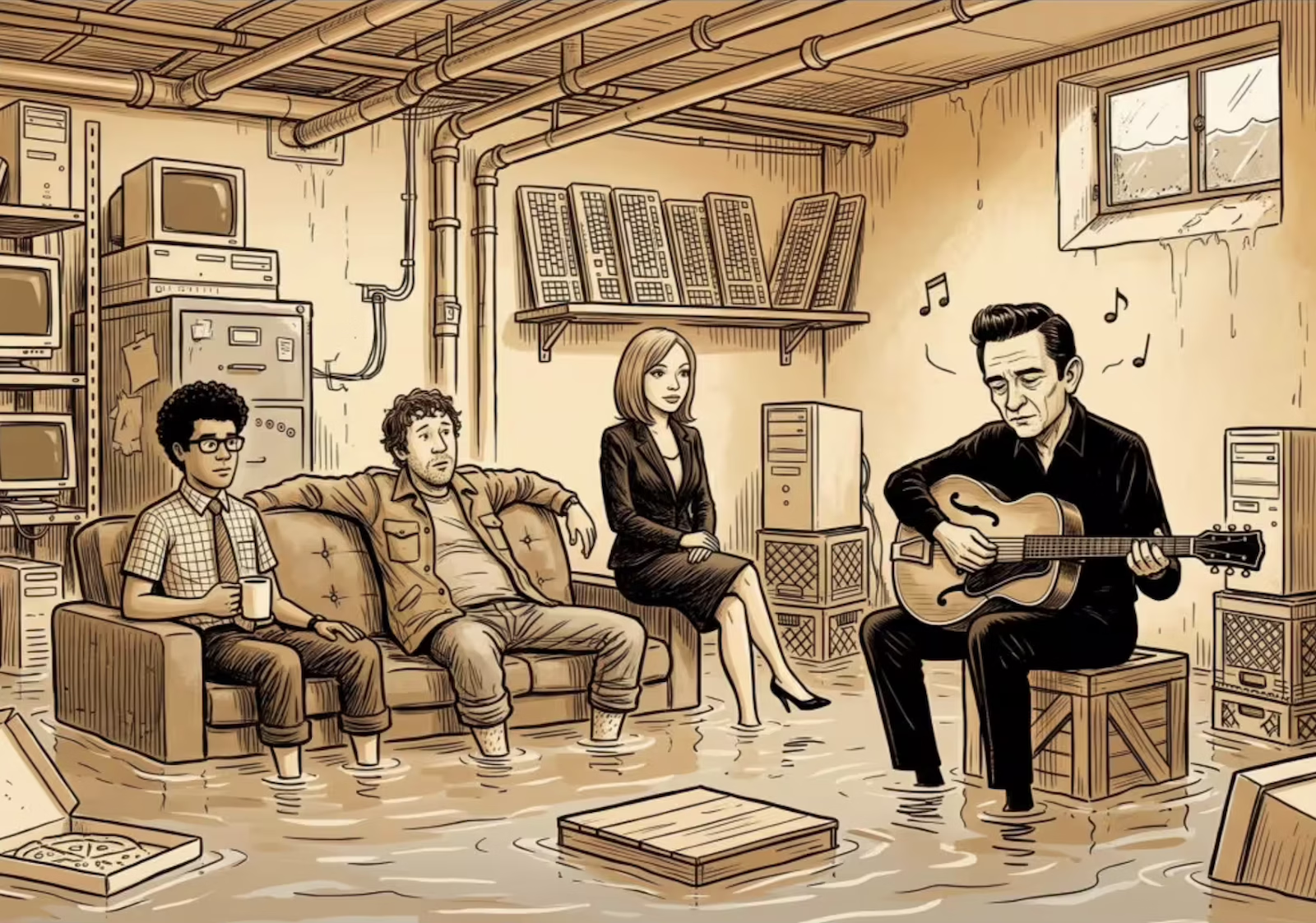
Johnny Cash's "Five Feet High and Rising" is a short, almost documentary song about the flood of January 1937, which reached his family's farm at Dyess, Arkansas. Verse by verse the water climbs, the same question asked and a higher number returned each time, until the family has to leave.
Often before the singing starts, Cash would explain what they found when the water went down. The flood had spread a load of rich black bottom dirt across their land. The next year's cotton was the best they'd ever grown.
Author: Matt Vitale



.avif)



.avif)